
- 239-778-4958
- [email protected]
- 830 Bald Eagle Dr Marco Island, FL 34145

The Benefits of Proper Pricing
There are several benefits of properly pricing your home. They include:
FASTER SALE
- When your home sells faster, you save carrying costs which include mortgage payments, taxes, insurance, and maintenance.
- A QUICKER SALE CREATES LESS INCONVENIENCE TO YOU. If you have moved before, you know the energy it takes to prepare for a showing: keeping the home clean, arranging for pets, children, and altering your lifestyle.
- PROPER PRICING CREATES LESS DEMANDS ON YOU, BY HELPING YOUR HOME SELL FASTER.
- AT MARKET VALUE YOUR HOME WILL GAIN EXPOSURE TO MORE PROSPECTS WHO CAN AFFORD THE PRICE.
- SELLERS WHO LIST AT THAT HIGH PRICE ARE LOOKING FOR THAT ONE BUYER WHO WILL PAY IT. Sellers often do not realize that they have discouraged many potential buyers who could have afforded the home.
- THE FINAL SALES PRICE IS PROBABLY ONE THAT WILL BE AFFORDABLE BY MORE PURCHASERS.
- SELLERS OFTEN ACCEPT A MUCH LOWER PRICE AT A MUCH LATER DATE SINCE THAT ONE BUYER WILLING TO PAY THE HIGHER PRICE NEVER COMES, COSTING YOU MORE IN TIME AND CARRYING COSTS.
- THE THREE MAJOR THINGS THAT AFFECT A SALE ARE LOCATION, CONDITION, AND PRICE. You CAN NOT control the Location, but YOU DO control the CONDITION and the PRICE.
INCREASED SALES AGENTS RESPONSE
BETTER RESPONSE FROM ADVERTISING AND SIGN CALLS
- Ad calls and sign calls to Realtors OR By Owners turn into showings when price is not a deterrent.
- SERIOUS PROSPECTS ARE WELL EDUCATED ABOUT ASKING PRICES IN THE AREAS THEY ARE SEEKING.
- SERIOUS PROSPECTS DO NOT WASTE THERE TIME ON A HOME THEY CONSIDER OVERPRICED.
HIGHER OFFERS
MEANS MORE MONEY TO SELLERS
Price Your Home in Southwest Florida, FL For Quick Sale
Learn The Best Home Pricing Strategies For Southwest Florida Property Value Estimation
Property value estimation is a science, and you need to first learn how to price your home in Southwest Florida, FL, to get the best possible deal on it.
In fact, there’s a whole certification called Pricing Advisor (PSA) that teaches realtors the best home pricing strategies in Southwest Florida, including comparative market analysis, reconstruction cost analysis, and so on. It also helps agents guide clients about the correct pricing of their properties, potentially reducing property days on the market while getting them a fair deal.
William Reynoso is a certified PSA who can help you understand your property’s realistic pricing and the reasons behind it. Call William at 239-778-4958 to get the best possible pricing advice right now.
Southwest Florida Real Estate Market Trends Vs National Averages:
If you’re trying to find out how much your home is worth, it’s a good idea first to understand real estate market trends in Southwest Florida, Florida. According to Zillow data, Southwest Florida’s home value is 140% higher than the US average. However, compared to the national average home value, which increased by 2.7% in the past year, Southwest Florida’s home property value decreased by 4.5%. And according to many experts, this is a trend we’ll see for some time because Southwest Florida is currently in a real estate price correction phase, so some decline is expected.
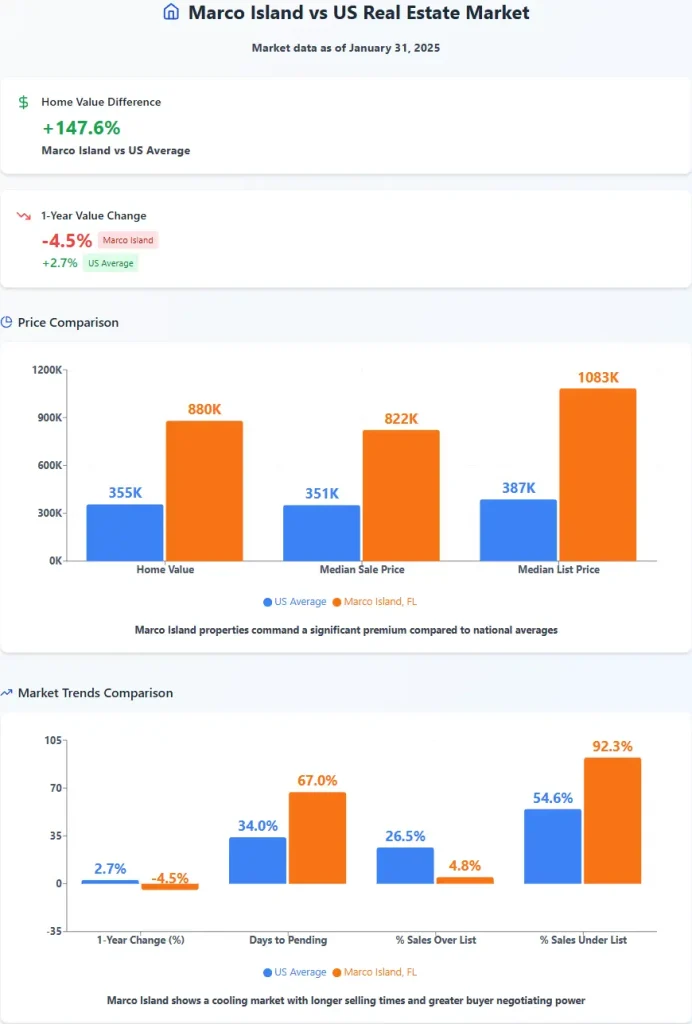
Some Key Insights from Data:
- Southwest Florida’s typical home value ($879,662) is 147.6% higher than the national average ($355,328)
- Southwest Florida is experiencing a market correction with values down 4.5% year-over-year, while the US market is growing at 2.7%
- Southwest Florida homes stay on the market twice as long (67 days vs 34 days nationally)
- Only 4.8% of Southwest Florida homes sell above list price vs 26.5% nationally
- The vast majority (92.3%) of Southwest Florida homes sell below list price, compared to 54.6% nationally
With a good real estate advisor, you can get correct pricing for your property even when the market is declining slightly. This can reduce the days your listing stays on the market, with a potential for a better deal.
Here’s How to Price Your Home in Southwest Florida, FL - 9 Practical Steps
Wondering what is my Southwest Florida home worth? While the exact values will differ for every property because each home has different features, location, condition, etc, we can tell you the 9 key steps that you can take to determine your home’s price:
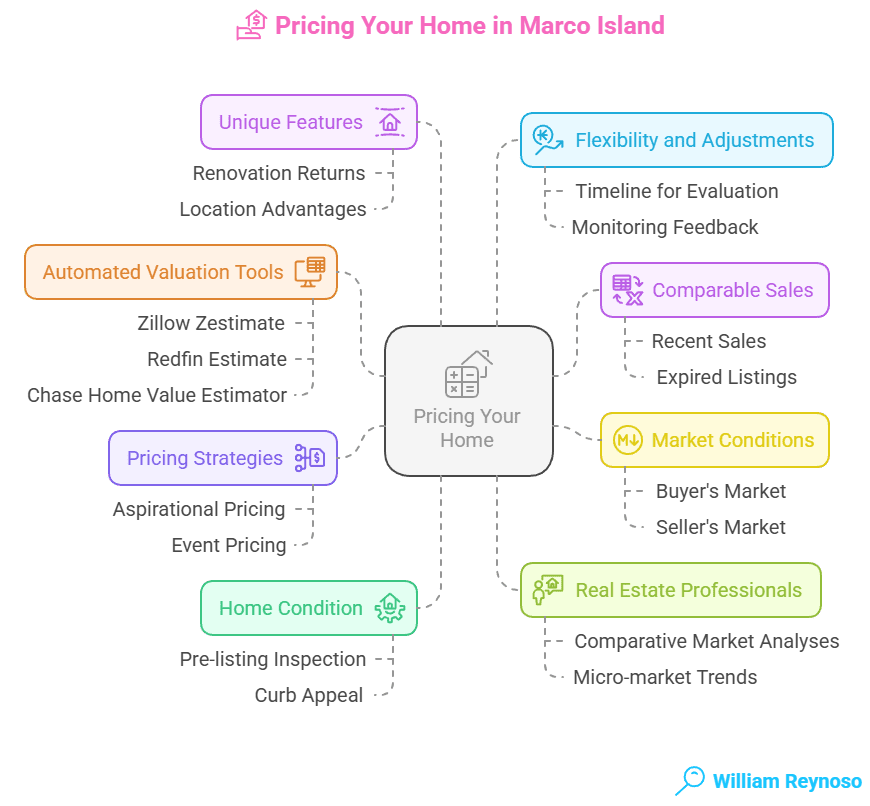
1. Start with Automated Valuation Tools
Begin with popular sites like Zillow’s Zestimate or Redfin’s estimator. These Southwest Florida FL home valuation services analyze public records, recent sales, and property characteristics to generate a ballpark figure.
Different valuation tools use different formulas, so check at least three separate sources. The range between them shows you how much variability exists in automated estimates.
| Valuation Tool | Strengths | Limitations |
|---|---|---|
| Zillow Zestimate | Large database, user-friendly | Can miss recent improvements |
| Redfin Estimate | Often more accurate in active markets | Less data in some neighborhoods |
| Chase Home Value Estimator | Uses a different algorithm | Sometimes less detailed |
Remember that these tools have limitations. They can’t see inside your home to assess condition, upgrades, or unique features. They don’t account for your freshly renovated kitchen, new hurricane windows, or that stunning lanai overlooking the water.
Use these numbers only as a starting point. Setting the right price for your Southwest Florida home involves more detailed analysis. Professional pricing advisors like William Reynoso can personally visit your house and check all tax records, among other things, to provide a more realistic estimate.
2. Analyze Recent Comparable Sales
After getting ballpark figures, look at actual sales data. What similar homes sold for recently provides the strongest evidence of your home’s value.
Look specifically for homes sold within the last three months. The Southwest Florida market shifts quickly, making older sales less relevant each week.
Focus your search within a quarter to half-mile radius of your home. The closer the comparable properties are to yours, the more relevant their prices become to your valuation.
The best comparables match your home’s key features:
- Similar square footage (within 10% of yours)
- Same number of bedrooms and bathrooms
- Similar age and architectural style
- Comparable lot size and features
- Similar location benefits (waterfront, views, etc.)
Don’t just look at final sale prices. Check the original listing prices, too. This reveals how much negotiation took place and whether sellers had to reduce prices to attract buyers.
Expired or withdrawn listings tell an important story. These properties didn’t sell, often because they were overpriced. Learn from others’ mistakes rather than repeating them.
Southwest Florida home appraisal tips from experts often emphasize reviewing days on market for comparables. Homes that sold within 30 days were likely priced right. Those sitting for 90+ days were probably overpriced initially.
Homes currently listed represent your direct competition. Buyers will compare your property to these active listings, so you need to position yourself competitively against them.
3. Understand Your Local Market Conditions
First, determine if you’re in a buyer’s, seller’s, or balanced market. Tools like Zillow’s Market Heat Index or your agent’s local market report can help identify this.
You’ll need more competitive pricing in a buyer’s market with lots of inventory. To stand out, consider setting your price slightly below similar properties. This might mean 3-5% below comparable recent sales.
You can price more aggressively in a seller’s market with limited inventory. If you’re in a hot Southwest Florida neighborhood, you may even be able to sell above the recent comparable sales when inventory is extremely low.
Track these important market indicators:
- Average days on market in your neighborhood
- Months of housing inventory available
- Percentage of homes with price reductions
- Ratio of listing price to sale price
Stay informed about local developments that might affect property values. New restaurants, shopping centers, or beach renovations can boost nearby home values. Conversely, road construction or commercial developments might temporarily depress prices.
Watch how interest rates are affecting buyer affordability. When rates rise, buyers can afford less house for the same monthly payment. This impacts what they’ll pay, especially in higher price brackets.
4. Consider Strategic Price Banding
Smart sellers use price banding to make their home stand out. This technique is often overlooked in any Southwest Florida home pricing guide, yet it’s extremely effective.
Start by examining all current listings in your neighborhood. Look for price clusters where multiple homes are grouped together.
Tip: Use our free property search tool to get a bird’s-eye view of properties on Southwest Florida, along with their prices and exact locations.
For example, if you notice several homes priced between $274,000 and $276,000 and then another group starting around $290,000, the $280,000 range offers a strategic opportunity.
Pricing in this gap means your home appears in searches without direct competition. When buyers compare properties, yours stands alone in its price bracket instead of being one of many similar options.
| Price Point Strategy | Buyer Psychology | Practical Example |
|---|---|---|
| Just-under pricing | Feels less expensive | $499,900 vs. $500,000 |
| Search threshold pricing | Appears in more searches | $599,000 captures $500K-$600K searchers |
| Gap targeting | Avoids direct competition | $280K when others are $275K or $290K |
Most online home searches use price ranges like $500,000-$600,000. Pricing your home at $599,000 rather than $605,000 means appearing in searches for buyers with a $600,000 maximum budget. This simple adjustment can dramatically increase your visibility.
Use “just under” century pricing psychology. Buyers perceive $499,900 as significantly less expensive than $500,000, even though the difference is minimal. This subtle technique works especially well in Southwest Florida’s competitive market.
Avoid random, odd pricing like $577,777. While you might think it makes your listing memorable, it actually looks unprofessional to buyers. They may wonder if you’re serious about selling.
5. Evaluate Your Home's Condition Objectively
Walk through your home and note everything a picky buyer might notice. Focus especially on the age and condition of major systems—roof, HVAC, plumbing, and electrical. These big-ticket items significantly impact value.
Buyers in Southwest Florida pay close attention to:
- Roof age and hurricane rating
- Air conditioning efficiency and age
- Signs of water damage or previous flooding
- Updated electrical systems that meet current codes
- Modern kitchen and bathroom fixtures
Determine if your home is truly “move-in ready” or will require immediate work. Move-in-ready homes command premium prices, especially in vacation destinations like Southwest Florida, where buyers often live out-of-state and can’t oversee renovations.
Consider getting a pre-listing inspection. For about a few hundred bucks, you’ll uncover issues that would likely arise during a buyer’s inspection. Fixing these problems before listing prevents negotiation headaches later.
Your home’s curb appeal matters enormously in Southwest Florida’s competitive market. Drive by your property and compare it objectively to neighboring homes. First impressions happen before buyers ever step inside.
Look for low-cost home improvements that boost perceived value without major renovations. Fresh paint, updated light fixtures, and landscaping refreshes typically return more than their cost in the final sale price.
6. Choose a Pricing Strategy Based on Your Goals
First, define your primary goal. Are you focused on selling as quickly as possible, maximizing your profit, or finding a middle ground between speed and price? Your answer determines your optimal strategy.
Consider these three main pricing approaches:
- Aspirational pricing involves listing high with room for negotiation. You set the price above comparable sales, hoping to find a buyer willing to pay your premium or negotiate down to your actual target price. This works when you’re not in a hurry and your home has unique features that might justify a higher price.
- Perceived market value pricing means pricing right in line with comparable sales. You’re essentially saying, “My home is worth exactly what similar homes have sold for.” This approach generally attracts serious buyers who recognize fair pricing.
- Event pricing involves setting your price slightly below market value to generate excitement and multiple offers. While it seems counterintuitive, this strategy often results in bidding wars that drive the final price above what you might have gotten with a higher initial price.
Each strategy comes with trade-offs. Higher prices typically mean longer market times. The average Southwest Florida home priced above market spends 30-45 additional days listed before selling. More competitive pricing makes sense if you need to move quickly or avoid carrying two mortgages.
Your timeline constraints matter enormously when selecting a strategy. Event pricing almost always works best if you must sell within 30 days. Aspirational pricing might maximize your return if you can wait 3-6 months for the right buyer.
7. Consult with Local Real Estate Professionals
Local experts know things no online tool can tell you. Their insights into your specific neighborhood can make a significant difference in setting the right price for your Southwest Florida home.
Get Comparative Market Analyses (CMAs) from a local real estate agent like William Reynoso. If you’re already working with an agent, ask about micro-market trends specific to your area. Southwest Florida has distinct neighborhoods with their own pricing patterns.
An agent might tell you that waterfront homes on the south end are selling faster than those on the north end, or that homes in certain communities command higher prices per square foot.
| Questions to Ask Agent | Why It Matters |
|---|---|
| How many similar homes have you sold? | Confirms relevant experience |
| What makes my neighborhood unique? | Tests their local knowledge |
| How would you market my specific property? | Shows understanding of your home's appeal |
| What data analytics do you use? | Reveals their approach to pricing |
Local experts know things no online tool can tell you. Their insights into your specific neighborhood can make a significant difference in setting the right price for your Southwest Florida home.
Get Comparative Market Analyses (CMAs) from a local real estate agent like William Reynoso. If you’re already working with an agent, ask about micro-market trends specific to your area. Southwest Florida has distinct neighborhoods with their own pricing patterns.
An agent might tell you that waterfront homes on the south end are selling faster than those on the north end, or that homes in certain communities command higher prices per square foot.
8. Factor in Your Home's Unique Features
Identify elements that genuinely increase value locally. When pricing waterfront homes in Southwest Florida, direct Gulf access can add 30-40% compared to canal access. Hurricane-rated windows, impact doors, and reinforced roofs command premiums because they lower insurance costs.
Be realistic about renovation returns. A kitchen remodel typically recoups 52.5% to 71.2% of the investment, not the full amount spent.
The most valuable upgrades in Southwest Florida to make a great first impression on buyers typically include:
- Updated kitchens with high-end appliances
- Renovated bathrooms, especially master baths
- Impact windows and hurricane protection
- Outdoor living spaces with water views
- Updated electrical systems and HVAC
Personal taste improvements often don’t translate to higher values. Your purple accent wall or custom mural might need to be neutralized. Unusual floor plans or highly personalized spaces can actually detract from value rather than add to it.
Location advantages matter enormously. Proximity to beaches, restaurants, and shopping adds significant value.
9. Plan for Flexibility and Adjustments
Even perfect pricing plans sometimes need adjustments. Real estate market trends shift quickly, and flexibility can save you thousands.
Set clear timelines for evaluating your pricing strategy. Many successful sellers agree to reassess after two weeks of listing if they haven’t received any serious interest. This prevents wasting valuable market time with the wrong price.
Watch for warning signs that your price may be too high:
- Few showing requests in the first week
- Buyers view but don’t make offers
- Negative feedback about price vs. condition
- Similar homes selling faster than yours
- Multiple price reductions from competitors
If adjustment becomes necessary, make one significant cut rather than multiple small reductions. A single 5-7% reduction has a greater impact than three 2% cuts. Small reductions signal desperation without significantly changing buyer perception.
Track buyer feedback religiously. When multiple potential buyers mention the same concern, it’s not coincidental. This feedback provides valuable insight into how the market views your property relative to its price.
Monitor new listings that might compete with yours. A similar but more updated home that lists at your price point can instantly make your property less attractive. You might need to adjust your price to maintain competitive positioning.
Remember that your home receives the most attention during its first 7-10 days on market. Each passing day brings fewer new buyers, making your initial pricing strategy crucial. Homes that need later price reductions typically sell for less than properly priced homes, even after accounting for the reduction.
5 Benefits of Setting the Right Price For Your Southwest Florida Home
Once you know your Southwest Florida property value estimation, you’ll be setting more realistic prices, which will help you in several ways. Here’s some key benefits you’ll get:
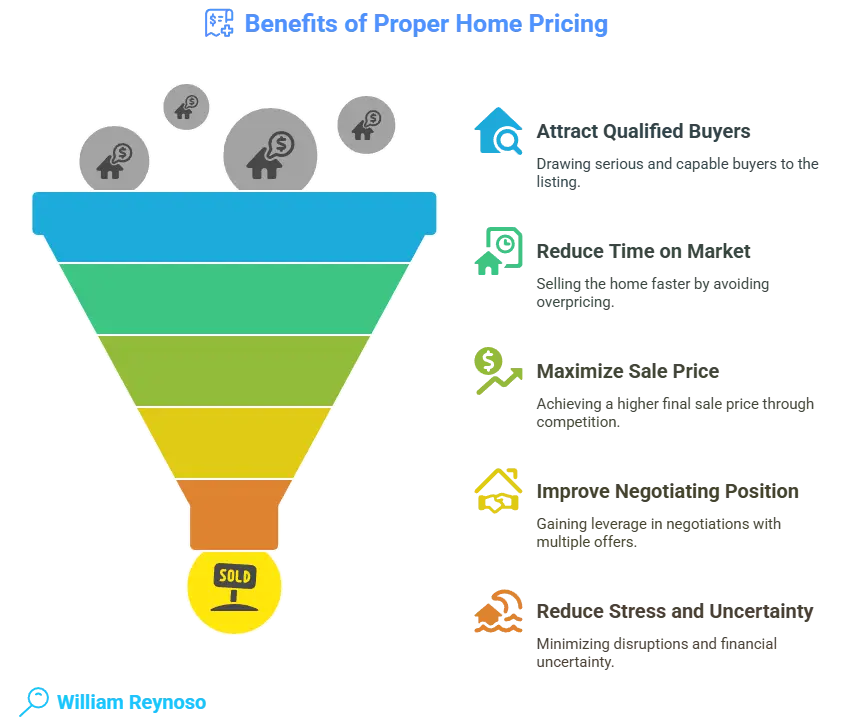
1. ATTRACTS MORE QUALIFIED BUYERS
Setting the right price for your Southwest Florida home immediately puts your property in front of the right audience. When you price accurately, you position your listing in the correct online search ranges where serious buyers are looking.
Properly priced homes receive more showing requests because buyers recognize the value proposition. These aren’t just curious neighbors—they’re qualified buyers who can actually afford your property and are ready to make legitimate offers.
When buyers perceive fair value, they’re more likely to schedule viewings and submit offers closer to asking price. You’ll waste less time with lowball offers from bargain-hunters who target overpriced homes expecting deep discounts.
2. REDUCES TIME ON MARKET
Buyers and their agents often become suspicious of homes with extended days on market. They wonder what’s wrong with the property that others have rejected. Proper pricing helps you avoid this stigma entirely.
Faster sales create momentum and urgency. When buyers see a new, well-priced listing, they’re motivated to act quickly before someone else does. This urgency often works in your favor during negotiations.
3. MAXIMIZES YOUR FINAL SALE PRICE
The best home pricing strategies in Southwest Florida often involve setting a price that attracts multiple interested buyers. This competition can drive your final sale price higher than your asking price through bidding wars.
| Price Strategy | Typical Market Response | Effect on Final Price |
|---|---|---|
| Strategically Priced | Multiple offers within first 2 weeks | Often sells above asking |
| Slightly Overpriced | Few showings, no offers for 30+ days | Price cut required, typically nets less |
| Significantly Overpriced | Very limited interest for 60+ days | Multiple reductions, substantially lower final price |
Homes that sell quickly typically sell closer to asking price than those requiring price reductions. When you avoid later reductions, you don’t signal desperation to buyers watching your property.
Faster sales also reduce carrying costs like mortgage payments, taxes, insurance, and maintenance—further improving your bottom line.
4. IMPROVES YOUR NEGOTIATING POSITION
Correct pricing dramatically improves your position by attracting serious buyers ready to make reasonable offers.
When multiple buyers show interest, you create a competitive atmosphere that shifts negotiating power in your direction. Buyers know they need to put their best foot forward rather than testing low offers.
Strong pricing also allows you to negotiate better terms and closing costs beyond just price—like closing date, inspection contingencies, or included items. Buyers competing for a well-priced home often offer favorable terms to make their bid stand out.
5. REDUCES STRESS AND UNCERTAINTY
You can confidently plan your move when you know your home will likely sell within a specific timeframe.
Fewer days on market means fewer showings and disruptions to your daily life. You won’t spend months keeping your home in perfect showing condition while waiting for the right buyer.
The financial uncertainty of potentially carrying two properties disappears when your home sells quickly. This peace of mind is perhaps the most valuable benefit of all.
3 COMMON PRICING MISTAKES SOUTHWEST FLORIDA SELLERS MAKE
Even if you know the tools and strategies for Southwest Florida property value estimation, this doesn’t automatically mean you’ll set the right price. The reason is that, as the owner, you’ll be too attached to the property. Secondly, you don’t have the exposure of the rest of the Southwest Florida market that realtors do. That said, make sure to avoid these mistakes:
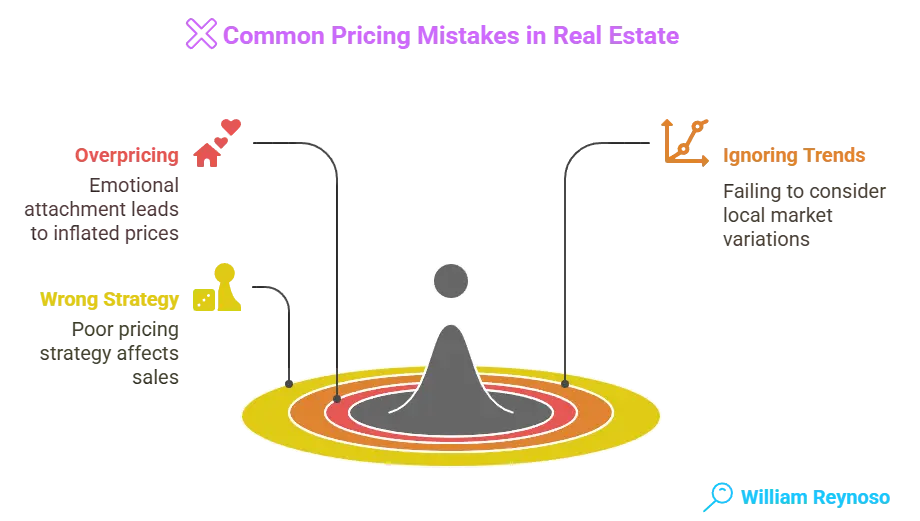
1. OVERPRICING BASED ON EMOTIONAL ATTACHMENT
Many sellers struggle to separate emotional value from market reality. The memories you’ve created in your home don’t translate to dollar value for buyers.
Unique personal customizations—like custom murals or unusual color schemes—may actually detract from value rather than add to it. Buyers see these as projects they’ll need to change.
After sitting on the market too long, overpriced homes develop stigmas. Later price reductions typically result in lower final sales prices than proper initial pricing would have achieved.
2. IGNORING MICRO-MARKET TRENDS
Pricing waterfront homes in Southwest Florida requires understanding specific micro-market trends. General market data isn’t enough; neighborhoods that are just streets apart can have completely different pricing patterns.
Seasonal fluctuations matter significantly in Southwest Florida’s market. Prices and buyer activity shift dramatically between winter and summer months.
Different neighborhoods value amenities differently. Gulf access might add 40% in one area but only 25% in another. Hurricane protection features command higher premiums in some neighborhoods than others.
HOA rules and neighborhood characteristics create distinct micro-markets even within Southwest Florida. Understanding these nuances is crucial for accurate pricing.
3. USING THE WRONG PRICING STRATEGY
How to price your home in Southwest Florida, FL often involves choosing between three distinct strategies, but many sellers default to aspirational pricing (pricing high with room to negotiate) without considering alternatives.
Starting high with plans to reduce later typically backfires. Studies show that homes priced right initially usually sell 63% faster than homes that require price reductions.
Small incremental price reductions signal desperation to buyers. If reduction becomes necessary, one significant cut (5-7%) works better than multiple small adjustments.
Many sellers don’t understand how pricing impacts online visibility. Pricing at $505,000 means missing all the buyers searching up to $500,000—often a crucial search bracket.
Southwest Florida FL home valuation services can help you avoid these common mistakes and develop a pricing strategy aligned with current real estate market trends. Getting it right from the start will save you time, money, and stress throughout your selling journey.
WILLIAM REYNOSO CAN BE YOUR SOUTHWEST FLORIDA HOME PRICING GUIDE:
If you don’t want to go through all of the hassle of estimating and setting the price of your home, why not just hire someone who’s been doing this for over two decades for homeowners across the Southwest Florida? William Reynoso is a certified Pricing Strategy Advisor who understands the nitty-gritty of Southwest Florida’s real estate market.
You’ll directly work with William on setting the best possible price for your property. Using his local network and diverse clientele of buyers, William will also help you sell at that price. So call 239-778-4958 to schedule a consultation today!
Frequently Asked Questions:
How can I determine the true market value of my home?
To determine your home’s market value, start with a professional home evaluation from a local real estate agent. They’ll perform a comparative market analysis using recent comparable sales in your neighborhood. Current market prices, price per square foot, and property condition all factor into an accurate valuation that reflects your home’s true worth in today’s market.
What role does location play in my home's price?
Location remains one of the most influential property value factors. Homes in desirable neighborhoods with amenities, good schools, and convenient access to services typically command higher prices. Property location value varies significantly based on factors like waterfront access, view quality, flood risk, and zoning regulations that affect potential use and development.
How do market conditions affect my pricing strategy?
Understanding whether you’re in a buyer’s or seller’s market is crucial for your pricing strategy. Key indicators include months of inventory, days on market, and list-to-sold price percentage. In a market with inventory scarcity, sellers have more negotiation leverage. Conversely, when there are more price drops and longer days on market, buyers gain advantage, requiring a more competitive pricing approach.
Should I price my home higher to leave room for negotiation?
Pricing psychology plays a significant role in attracting buyers. While it might seem logical to price high for negotiation room, overpriced homes often experience extended days on market and eventually require price drops. Based on a thorough comparative analysis, homes priced at market value typically sell faster and sometimes even trigger multiple offers in competitive markets.
What economic factors should I consider when pricing my home?
Several broader economic indicators influence home price appreciation and forecasted growth. These include interest rates, population growth, supply and demand dynamics, and overall economic resilience. Rental potential, especially in vacation markets, also affects your property’s investment potential. Working with a local real estate agent who understands these market dynamics is essential for strategic pricing.